
EPAL marking – check licences and repairs
EPAL marking helps you identify the licensing system a pallet belongs to and who manufactured or repaired it. Compare the information on the pallet with EPAL’s licensee register and the supplier’s documentation.
This guide explains what the marking tells you, how to distinguish a manufacturing licence from a repair licence, and which documents to request from the supplier before buying.
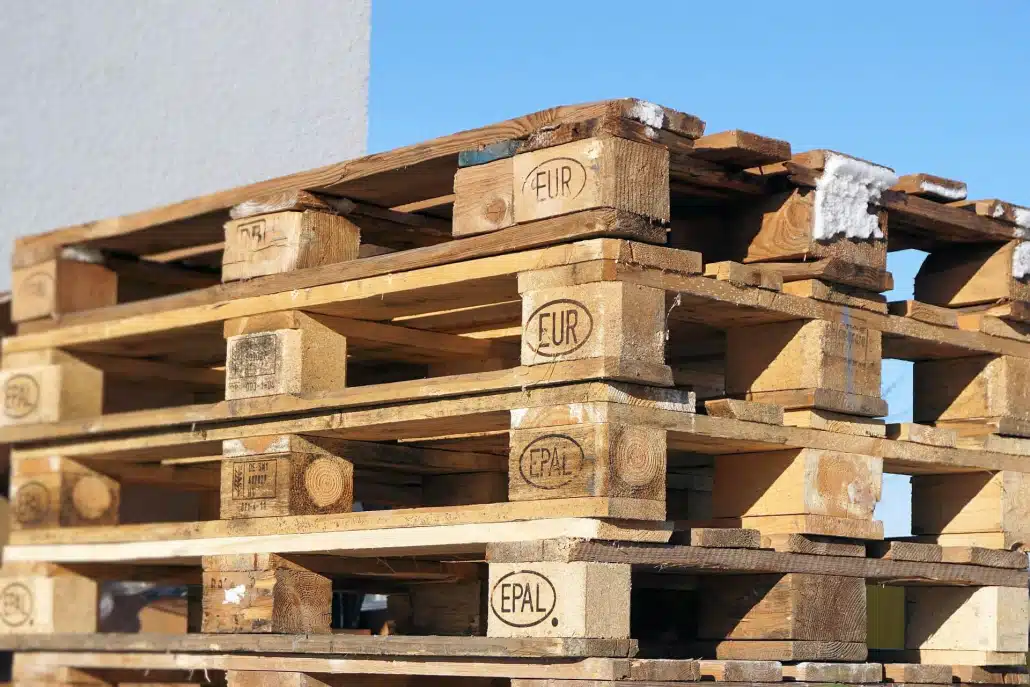
Read the marking
How to read EPAL marking
EPAL pallets are manufactured under the European Pallet Association’s licensing and quality system. Inspect both long sides of the pallet. The markings serve different purposes:
| Marking | What it tells you |
|---|---|
| EPAL in an oval on the corner blocks | The pallet’s trademark marking within the EPAL system. |
| The manufacturer’s EPAL licence number and the year and month of manufacture | Information about the manufacturer and date of manufacture. |
| EPAL control staple on a centre block | A marking used in EPAL’s production quality control. |
| Repair nail bearing the EPAL mark and licence number | Information about the licensed repairer. |
| IPPC symbol, country code and operator number | Marking under the ISPM 15 phytosanitary standard. |
| The treatment code HT in the IPPC mark | The code for heat treatment under ISPM 15. |
Use EPAL’s product data sheet with its marking guide when comparing the position and design of the markings. The data sheet covers EPAL 1; specify which EPAL model your batch must contain.
The EPAL licence number and the number in the IPPC mark serve different purposes. The manufacturer’s and repairer’s licence numbers may also differ, as different companies may have carried out the work.
You can check whether the marks on the pallet are legible, examine their design and look for visible irregularities. Compare the licence and origin details with EPAL’s licensee register and the supplier’s documentation. Markings on older pallets may look different and require further checks.
Manufacturing licence
Check the manufacturer’s licence
Manufacturing EPAL pallets requires a valid manufacturing licence. Requirements include correctly dimensioned materials, approved nails, equipment and work carried out in accordance with EPAL’s technical regulations. Licensed operations undergo external inspections under EPAL’s quality system.
Search for the company or licence number in EPAL’s licensee register. Compare the following details with the supplier’s documentation:
- Company name and address.
- Licence number and licence type.
- The EPAL product covered by the licence.
- The business that manufactured the batch being quoted.
The register shows who is listed at the time of the check. For older pallets, documentation of their manufacturing or repair history may be needed.
A manufacturing licence does not establish authorisation to repair EPAL pallets. The repair licence must be checked separately.
Repair licence
Check the repair licence and repair nail
When an EPAL pallet needs repair for continued use in the system, the work must be carried out by an EPAL-licensed repairer in accordance with EPAL’s technical regulations. Requirements include correctly dimensioned replacement parts, approved nails and repair marking, as set out in EPAL’s requirements for a repair licence.
A replaced board shows that work has been carried out on the pallet. Read the marking on the repair nail and compare the repairer’s licence details with EPAL’s licensee register and the supplier’s documentation. The manufacturer’s original number does not replace this check.
Used and repaired describe different things. A used pallet has been in service. A repaired pallet has undergone repairs. A pallet can be both used and repaired by an EPAL-licensed repairer. A used pallet has not necessarily been repaired.
Also check the treatment after repair. Do not assume that a pallet retains its ISPM 15 status following an EPAL-licensed repair. Ask the supplier to confirm the treatment and marking for the batch and the intended shipment. EPAL’s product and repair information explains the distinction.
Dimensions, systems and treatment
Distinguish between pallet dimensions, EPAL and ISPM 15
The dimensions 1 200 × 800 mm alone do not establish that a pallet belongs to the EPAL system. They describe the load area; marking and licence details must be checked separately.
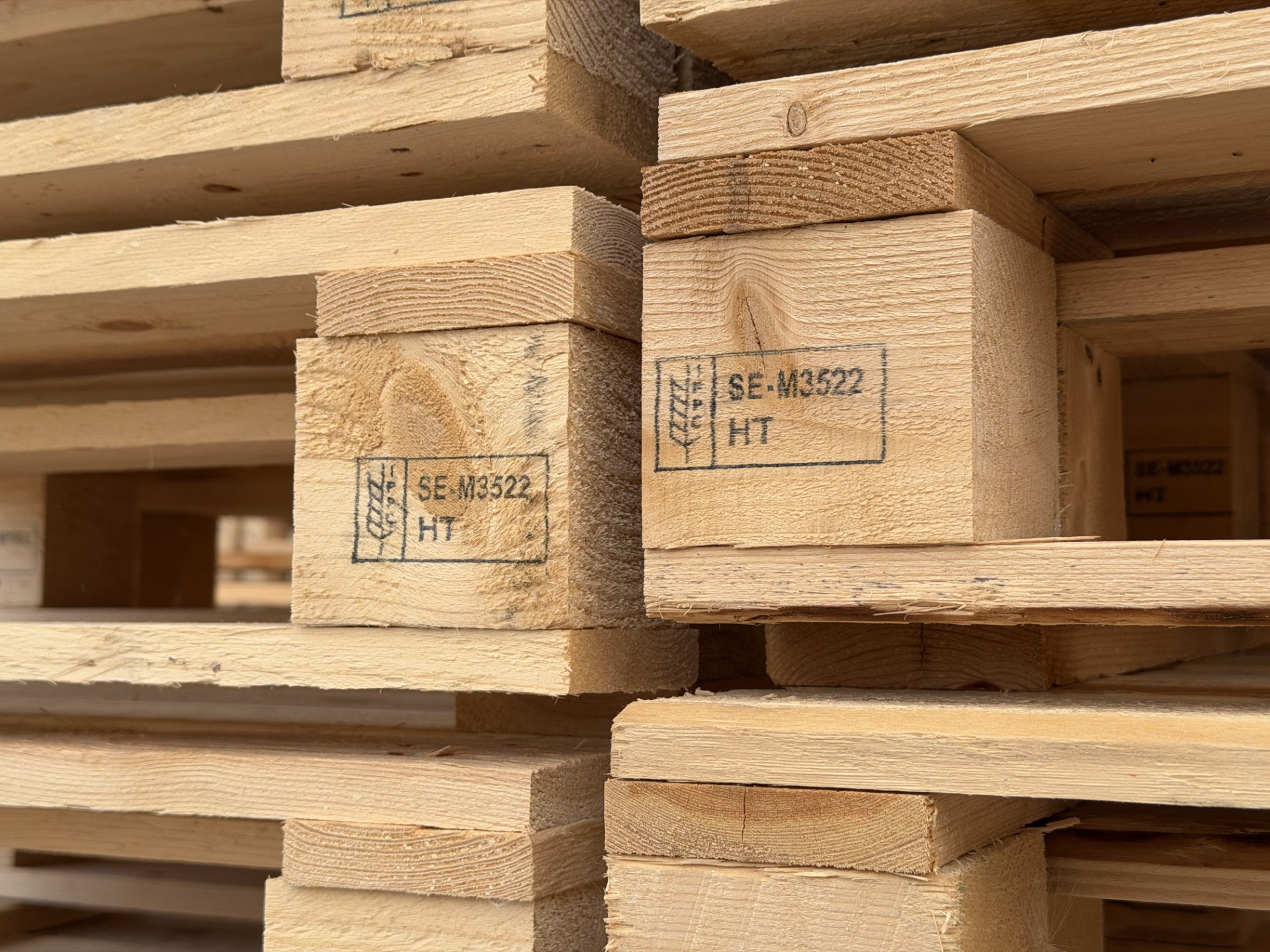
EUR/UIC marking and EPAL marking
EUR/UIC marking and EPAL marking belong to different systems. Specify which marking the recipient accepts and the applicable exchange terms. Identical dimensions do not automatically make pallets interchangeable. Read more in EPAL’s information on the relationship between the systems.
EPAL and ISPM 15
EPAL covers pallet construction and the quality system. ISPM 15 concerns plant health and aims to reduce the risk of pests spreading through wood packaging.
An IPPC mark does not establish that a pallet is covered by an EPAL licence. You also need to check the pallet’s treatment and the destination country’s requirements, even if the pallet is EPAL-marked. Drying alone does not establish compliance with ISPM 15 either.
Read our guide to ISPM 15 marking and export requirements for more information about treatment, marking and destination countries.
GLF’s documentation
GLF’s published EPAL licence documents
GLF’s published licence documents relate to GLF Polska Mielec Sp. z o.o.: PL-035 for manufacturing EPAL Euro pallets and PL-459 for repair. The licences apply to the named company and the respective activities.
The original documents, licence scope and business addresses can be found among our licence and quality documents. You can also read about manufacturing in Mielec.
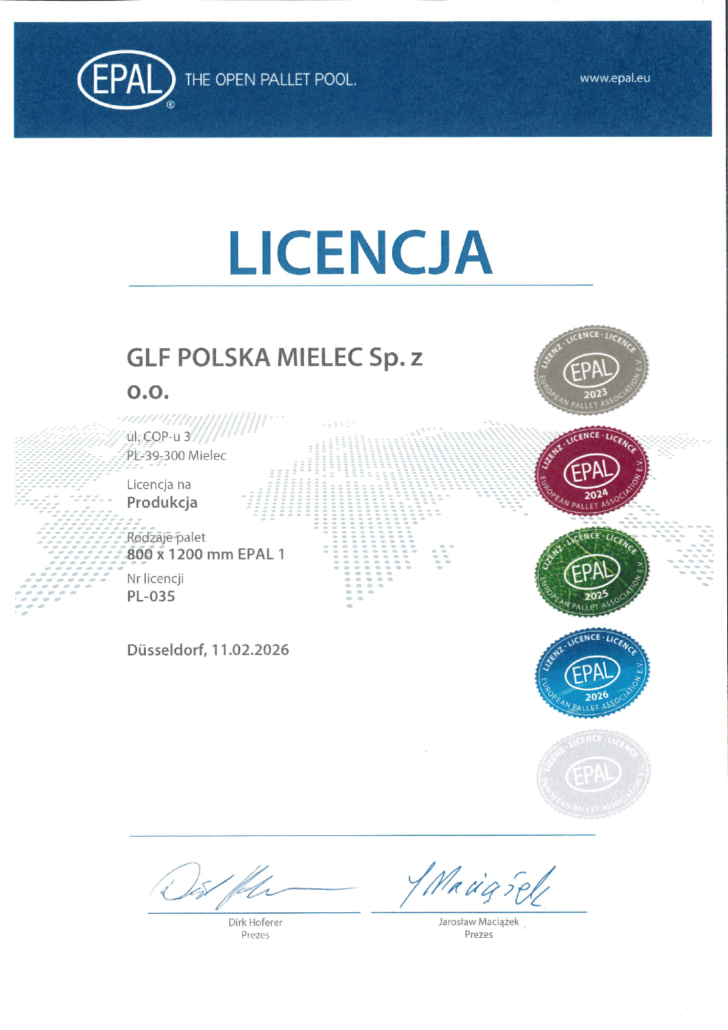
EPAL – manufacturing
- Licence number
- PL-035
- Licence holder
- GLF Polska Mielec Sp. z o.o.
- Product
- EPAL 1
- Issued
- 11 February 2026
- Year shown
- 2026
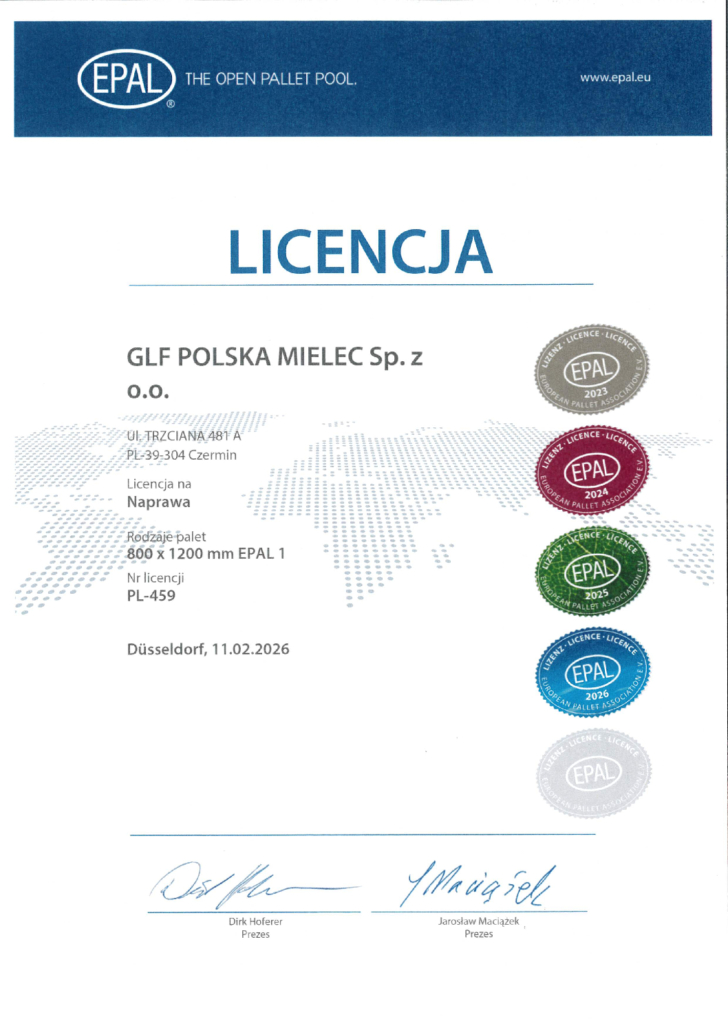
EPAL – repair
- Licence number
- PL-459
- Licence holder
- GLF Polska Mielec Sp. z o.o.
- Product
- EPAL 1
- Issued
- 11 February 2026
- Year shown
- 2026
The repair document and the licence register list different business addresses. Confirm the details with GLF.
Checks on delivery
Check the condition of the batch on delivery
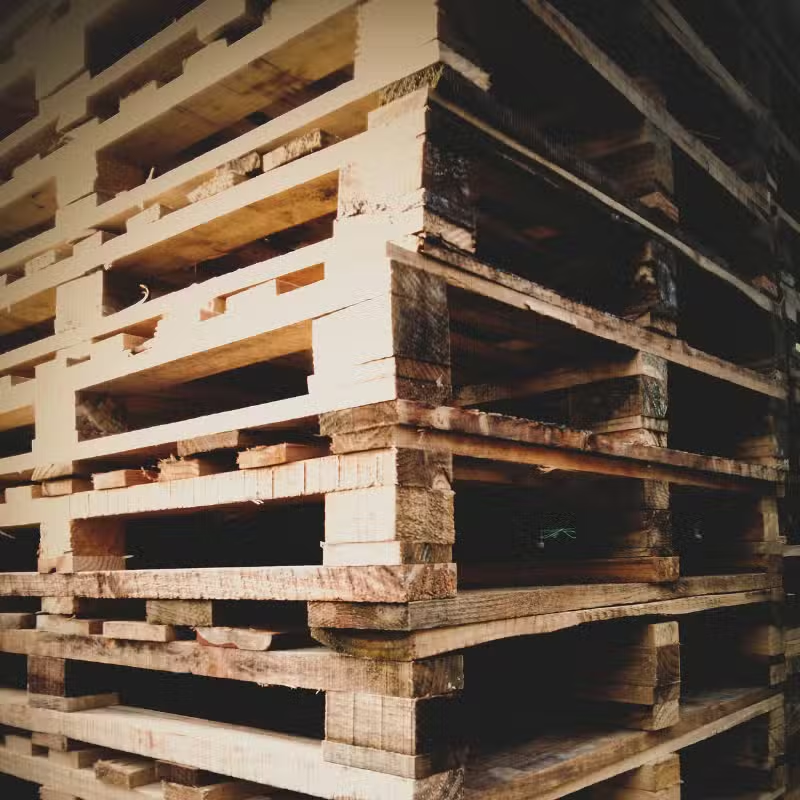
The marking check must be accompanied by an inspection of the pallet’s current condition. Missing boards or blocks, transverse or diagonal fractures in boards, rot and contamination that could transfer to the goods are examples of defects under EPAL’s criteria. Twisted blocks protruding more than 10 mm beyond the outer edge also make a pallet ineligible for exchange.
Use the full EPAL quality documentation and exchange criteria when assessing the pallets. If the quotation specifies a quality class, ask for its definition and the accepted deviations. EPAL’s quality classification is used by agreement between the parties. “Repaired” is not a separate quality class.
Also confirm the weight of the goods, load distribution, how the pallet is supported and the handling equipment used. Marking and licence details alone are not enough to assess suitability for the load.
Before ordering
Document the marking requirements for the batch
Ask the supplier to specify the EPAL model, marking requirements, manufacturer or repairer, treatment and agreed condition in the order documentation. If you need EPAL-marked pallets, state this explicitly and ask the supplier to confirm the marking for the batch in the quotation.
Product designs and specifications are available on the pages for the EUR pallet with presswood blocks, item 1091 and the EU pallet with solid wood blocks, item 1090. The product name alone does not confirm that every batch offered is EPAL-marked.
Condition, design and quantity affect the price. Read more about pricing factors and comparing quotations in our price guide.
Read about collection, sorting and repair on our page about GLF’s pallet management services.
Checklist before buying
EPAL marking and licence checklist
checks completed
| Check | Check on the pallet | Confirm with the supplier |
|---|---|---|
| Dimensions, legibility of the marks and marking design. | The ordered EPAL model, marking system and recipient’s requirements. | |
| The manufacturer’s licence number, year and month of manufacture. | Company, licence type, product and address. | |
| Repair nail and visible repairs. | The repairer’s licence and which pallets the information applies to. | |
| Complete IPPC mark and treatment code where required. | ISPM 15 status, including after repair, and the destination country’s requirements. | |
| Boards, blocks, fractures, nails and contamination. | Agreed condition, any quality class and accepted deviations. | |
| Visible damage that could affect handling. | Load, load distribution, support and handling equipment. | |
| Record any deviations on delivery. | Keep the specification and relevant licence and treatment details. |
Confirm the documentation for your batch
Contact GLF
to confirm which marking and licence documents apply to your batch.
