
Guidance for buyers
ISO 14001 at GLF – environmental management and evidence for buyers
ISO 14001 certification gives you, as a buyer, a basis for assessing how a supplier organises and monitors its environmental work. Certification covers the environmental management system within the scope stated in the certificate. It does not show the carbon footprint of an individual pallet or the FSC or PEFC status of its raw material.
When purchasing pallets and wooden packaging, you therefore need to check both the scope of the certificate and the documentation for the product you are ordering. Here, we explain what ISO 14001 can contribute and which information you need to request separately.
What does ISO 14001 mean?
An environmental management system helps an organisation assign responsibilities, establish working practices and monitor its environmental work. It provides a structure for identifying environmental impacts, managing compliance obligations, setting objectives and improving environmental performance.
The process connects several elements:
-
Identify environmental aspects. Map areas such as material use, energy use, transport and waste.
-
Assess their significance. Determine which aspects are significant and what the organisation can control or influence.
-
Set objectives and plan actions. Assign responsibilities, resources and a timetable.
-
Monitor the results. Evaluate the work using relevant information and a clearly defined scope.
-
Improve working practices. Address nonconformities and use the results to improve operations.
Certification means that the environmental management system has been assessed against the requirements of the standard within the certificate’s scope. It does not guarantee climate neutrality or a particular reduction in emissions.
ISO 14001 also includes a life cycle perspective. The organisation needs to consider relevant environmental issues throughout a product’s life cycle, taking account of what it can control or influence. This does not mean that a detailed life cycle assessment exists for every product.
ISO 14001:2026 is the latest published edition. GLF’s published certificates below refer to ISO 14001:2015. The standard edition, current certificate status and any transition conditions need to be checked separately.
Which GLF operations are covered by the published certificates?
GLF’s published certificates state the following companies, addresses and scopes of activity.
Original documents from GLF’s website
GLF Genarp AB
LRQA · 10671576
ISO 14001:2015 / ISO 9001:2015
Stated end date: 16 March 2028
Open the certificate PDF ↗GLF TRÄAB AB
RISE · 4261 M
ISO 14001:2015
Stated end date: 25 January 2027
Open the certificate PDF ↗GLF Polska Mielec Sp. z o.o.
3406/08/2025/ZSZ/R
ISO 14001:2015 / ISO 9001:2015
Stated end date: 1 August 2028
Open the certificate PDF ↗The documents state ISO 14001:2015. Check the current certificate status and that its scope covers the supply in question.
| Company and operating address | Scope stated in the document | Certificate and stated end date |
|---|---|---|
| GLF Genarp ABKontoristgatan 4, 247 70 Genarp |
Production of pallets and wooden packaging, and trading in new and used wooden products. | LRQA 10671576 (PDF)16 March 2028 |
| GLF TRÄAB ABSävsjö Skahus, 364 96 Sävsjöström |
Manufacture of wooden packaging, timber stacking spacers and furniture components. | RISE 4261 M (PDF)25 January 2027 |
| GLF Polska Mielec Sp. z o.o.ul. COP-u 3, 39-300 Mielec, and Trzciana 481A, 39-304 Czermin | Manufacture of and trading in transport crates and wooden packaging, and their recovery. | 3406/08/2025/ZSZ/R (PDF)1 August 2028 |
Company names, addresses and the scope of activities need to match the supply in question. A certificate for one GLF company does not automatically cover other companies or production sites in the Group.
The published certificate for GLF Genarp AB states Kontoristgatan 4. If the supply involves operations at Kamrergatan 10, you need documentation confirming the scope of certification for that site.
The end date stated in a document does not replace a check of the current certificate status. GLF TRÄAB AB’s certificate is listed in RISE’s register. For Genarp and Mielec/Czermin, the published documentation needs to be supplemented with confirmation of current certificate status before procurement.
Our Sustainability & quality page contains the certificates and information about the documentation available.
Environmental management for pallets and wooden packaging
For pallets and wooden packaging, environmental issues need to be considered in relation to the product’s function and use. The following areas are relevant to discuss when assessing a supplier. Which environmental aspects are significant depends on the operations and the specific logistics flow.
Material use and wastage
How much material is needed to meet the load, handling and protection requirements? How is wastage measured, and how are residual materials managed? Material use needs to be assessed alongside load-bearing capacity, the risk of damage and service life.
Energy
Which parts of manufacturing are included in the reporting, and what period do the data cover? To use an entire factory’s energy consumption as evidence for a specific product, you need a documented method for allocating that energy use.
Transport
What distances, modes of transport and load factors is the assessment based on? Are there return journeys that need to be included?
Reuse
Is the packaging suitable for the planned return flow? How are its condition and repair needs assessed? Figures for the number of uses need to be based on documented use or clearly stated assumptions.
Waste and residual materials
Which materials can be separated after use, and how should they be managed? Distinguish between reuse, material recycling and energy recovery.
The GLF Genarp AB Sustainability Report 2025 (PDF) sets out objectives including production wastage below two per cent and an increased share of self-generated electricity. The report covers GLF Genarp AB. These objectives must be distinguished from achieved results and from environmental data for an individual product.
Key starting points when discussing our pallets and packaging are therefore the weight, dimensions, protection needs and handling of the goods.
What information does a buyer need beyond the certificate?
Start by specifying what your purchasing requirement concerns. A requirement for the supplier’s environmental management calls for different evidence from a requirement for a pallet’s material or carbon footprint.
| Purchasing question | What ISO 14001 can contribute | What additional evidence is needed |
|---|---|---|
| Are the supplying company and manufacturing site covered? | The certificate states which company and activities are covered. | Current certificate status, any site annex and confirmation of how the scope relates to the supply. |
| Which environmental issues are prioritised? | A structure for significant environmental aspects, objectives and monitoring. | Relevant objectives, responsibilities, baseline, reporting period and monitored results. |
| How is compliance with applicable environmental requirements monitored? | Working practices for identifying compliance obligations and evaluating compliance. | A relevant summary of monitoring and how any nonconformities are addressed. |
| How is material used and wastage managed? | Control and monitoring of relevant environmental aspects. | A product specification and material and wastage data with a clearly defined scope. |
| Can the packaging be used more than once? | Relevant working practices may form part of environmental management. | Functional requirements, criteria for assessing condition, arrangements for repairs and evidence supporting the number of uses. |
| What energy use and transport can be attributed to the product? | Monitoring at an operational level may provide input data. | Data that can be linked to the product, an allocation method, reporting period and transport assumptions. |
| Is the delivery FSC or PEFC certified? | ISO 14001 does not establish this. | The relevant chain of custody certificate, its current status, product scope and certification claim in the delivery documents. |
| What is the packaging’s carbon footprint? | The certificate contains no information about the product’s carbon footprint. | A product carbon footprint calculation stating the method, unit of comparison, system boundary, data reference year and assumptions. |
| How should the packaging be managed after use? | Relevant waste issues may form part of environmental management. | Material composition, sorting instructions and information on how and where the packaging is to be managed after use. |
Evidence for the specific product
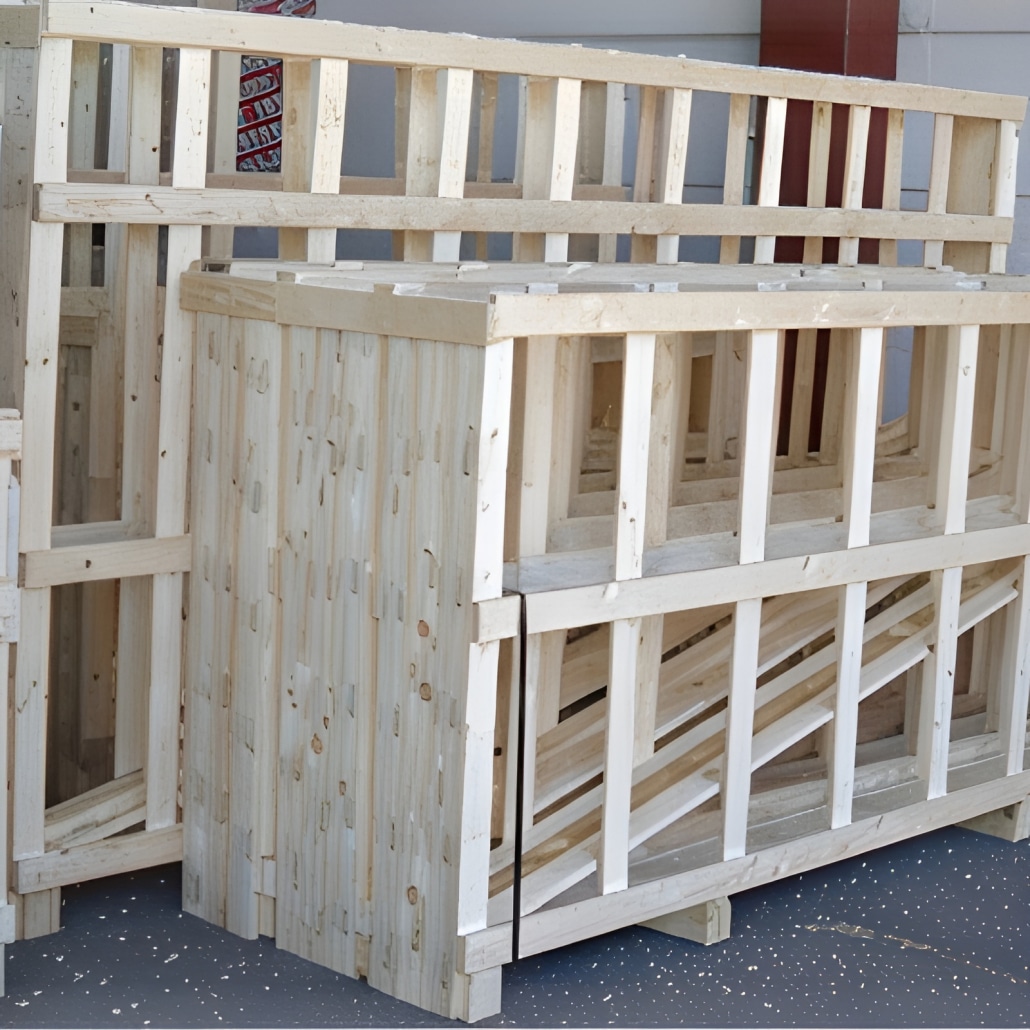
For custom packaging you need to specify environmental requirements alongside the dimensions, weight, handling and protection needs of the goods. Also state whether the packaging is to be used once or as part of a return flow.
If you compare two solutions, they need to be assessed for the same function and use. When comparing single-use and returnable packaging, for example, you need to use the same load and protection requirements. Also state the number of deliveries, service life, material quantities, repairs, return transport and management after the final use. ISO 14001 does not determine which option has the lowest environmental impact in that logistics flow.
How ISO 14001, FSC/PEFC and product climate impact data differ
ISO 14001 concerns environmental management. Certification concerns how the organisation controls, monitors and improves its environmental work within a defined scope.
FSC and PEFC have separate requirements covering areas such as traceability. If you set these requirements for a product, you need to check the certification claim for the delivery and the documentation supporting that claim. ISO 14001 does not substantiate the FSC or PEFC status of the raw material.
Product climate impact data need to be based on a separate calculation. The evidence needs to describe which product the calculation concerns, which stages of the life cycle are included, and which data and assumptions are used. These data describe climate impacts, not all environmental characteristics.
Supplier assessment checklist
- Check the company’s legal name, manufacturing site and scope of activities against the supply in question.
- Check the standard edition, the validity period stated in the certificate and its current status.
- Request relevant environmental objectives and monitored results with a clearly stated reporting period and scope.
- Check how relevant environmental compliance obligations are monitored.
- Specify the packaging’s function, materials, handling and expected use.
- Request separate evidence when the purchase includes requirements for FSC or PEFC certification or product climate impact data.
- Compare alternatives for the same function and use, with the service life and relevant assumptions stated.
- Agree which documentation is required when ordering, on delivery and during follow-up.